
Quick answer
8x10 inch and 10x14 inch are sheet sizes of dry digital film used to print radiology images. 8x10 suits smaller images and multi-image layouts at lower cost per sheet, while 10x14 gives more space for larger anatomy such as chest and spine images. Whichever you choose, the film must be compatible with your specific dry imager model.
What is digital X-ray film?
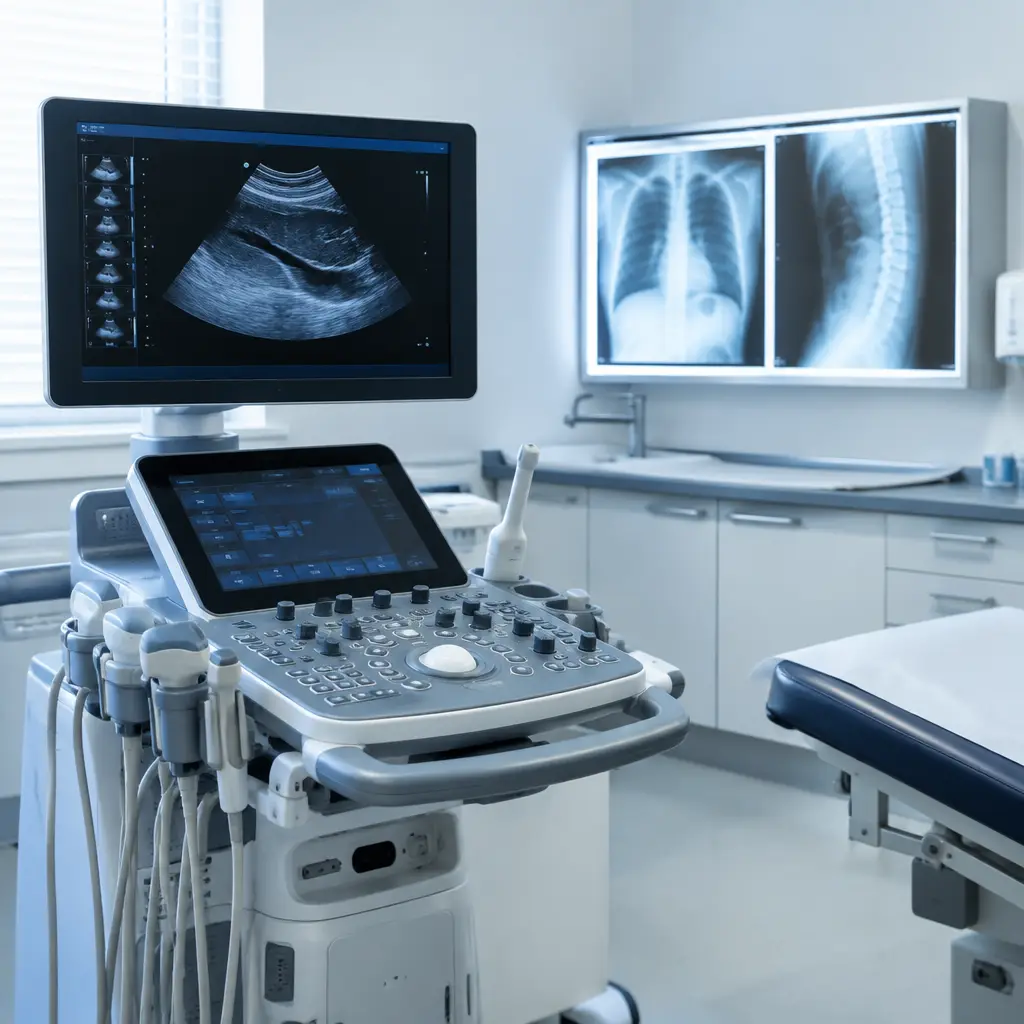
Digital X-ray film — often called dry film or dry laser film — is the sheet medium used to print images from digital radiography (DR), computed radiography (CR), CT, MRI and other modalities. Unlike traditional wet-processed film, it is printed on a dry imager using laser or thermal technology, with no chemicals or darkroom.
Hospitals still print images for referrals, patient records, surgical planning and situations where viewing workstations are not available. Choosing the right sizes and quantities helps radiology departments control cost and avoid stock-outs.
What is the difference between 8x10 and 10x14 film?
The sizes describe the sheet dimensions in inches. They are both widely used, and most departments stock both.
| 8x10 inch | 10x14 inch | |
|---|---|---|
| Approximate size | 20 x 25 cm | 25 x 35 cm |
| Typical uses | Extremities, dental and small-part images, CT/MRI multi-image layouts, paediatric images | Chest, abdomen, spine, pelvis, larger single images and detailed layouts |
| Cost per sheet | Lower | Higher |
| Layout space | Suitable for one small image or several reduced images | More space for full-size anatomy or more images per sheet |
| Storage and filing | Easier to file and hand to patients | Needs larger envelopes and storage |
Actual clinical use varies by department protocol and radiologist preference. Some departments print chest images on larger sheets, while others use 10x14 as their largest size to control cost. Review your own printing records before changing your size mix.
Is film size the same as cassette or detector size?
No, and this is a common source of confusion in purchase requests. In digital imaging, the image is captured by a CR cassette or DR detector and processed as a digital file. The film size is chosen afterwards, at the printing stage. A study captured on a large detector can be printed on 8x10 film at a reduced scale, and a small image can be printed on 10x14 film. When specifying film, always state the printed sheet size, not the capture size.
Why does printer compatibility matter so much?
Dry imagers are designed for specific film types. Films differ in coating, thermal or laser sensitivity, sheet thickness and packaging, and many printers read coded information from the film pack or cartridge. Film that is not designed for your imager may not load, may jam, may print with poor density, or may not be accepted by the printer at all.
- Always state the imager make and model in your requisition or tender.
- State which film trays or sizes the imager is configured for; some printers hold several sizes at once.
- If the tender allows equivalent film, require written confirmation of compatibility with the stated imager.
- Run a trial box before committing to a large order of an equivalent brand.
How is digital film packed and how should I compare prices?
Film is normally sold in boxes containing a fixed number of sheets. The count varies by manufacturer and size, so compare offers per sheet rather than per box. Ask suppliers to state clearly the number of sheets per box and the number of boxes per carton, and make sure quantities in your tender are expressed in the same unit to avoid misunderstandings at delivery.
How much film should a hospital order?
Base orders on actual consumption rather than estimates. Review your printing logs or past purchase records for each size over several months, allowing for seasonal changes in patient load. Many hospitals order on an annual contract with scheduled monthly or quarterly deliveries. This keeps stock fresh, spreads cost and reduces storage space. Keep a buffer stock sized to your supplier's delivery lead time so printing never stops.
How should digital X-ray film be stored?
Dry film is sensitive to heat, humidity and light. Poor storage can cause fogging, density changes and reduced shelf life. Follow the manufacturer's storage instructions, which usually include:
- Store in a cool, dry place away from direct sunlight, heaters and air-conditioning outlets.
- Keep boxes in their original packaging until loading into the printer.
- Store boxes as the manufacturer instructs — often flat or on edge — and do not stack heavy items on top.
- Keep film away from chemicals, gases and sources of radiation.
- Use stock on a first-expiry, first-out basis and check expiry dates at delivery.
How do I specify digital X-ray film in a tender?
A clear specification prevents disputes and ensures you receive usable film. Include the following for each line item:
- 1Film type: dry digital film (laser or thermal as applicable).
- 2Sheet size: 8x10 inch or 10x14 inch, listed as separate line items.
- 3Compatible imager: make and model of every printer the film must run in.
- 4Unit of measure: sheets per box and total quantity in boxes.
- 5Minimum remaining shelf life at delivery.
- 6Whether approved equivalents are acceptable, and what proof of compatibility is required.
- 7Delivery schedule: single delivery or staggered deliveries over the contract period.
Key takeaways
- 8x10 and 10x14 are printed sheet sizes, not cassette or detector sizes.
- 8x10 suits smaller images and multi-image layouts; 10x14 suits larger anatomy and detailed layouts.
- Film must match your dry imager model — always state it in your requisition or tender.
- Compare offers per sheet, and confirm sheets per box before ordering.
- Store film cool, dry and away from light, and rotate stock by expiry date.
Frequently asked questions
[HSE LEAD NAME]
Supply & Procurement, SafeCore Solutions · 20+ years Gulf HSE experience
About the authorNeed this done?
SafeCore Solutions can help with digital x-ray film supply for your project or facility.